
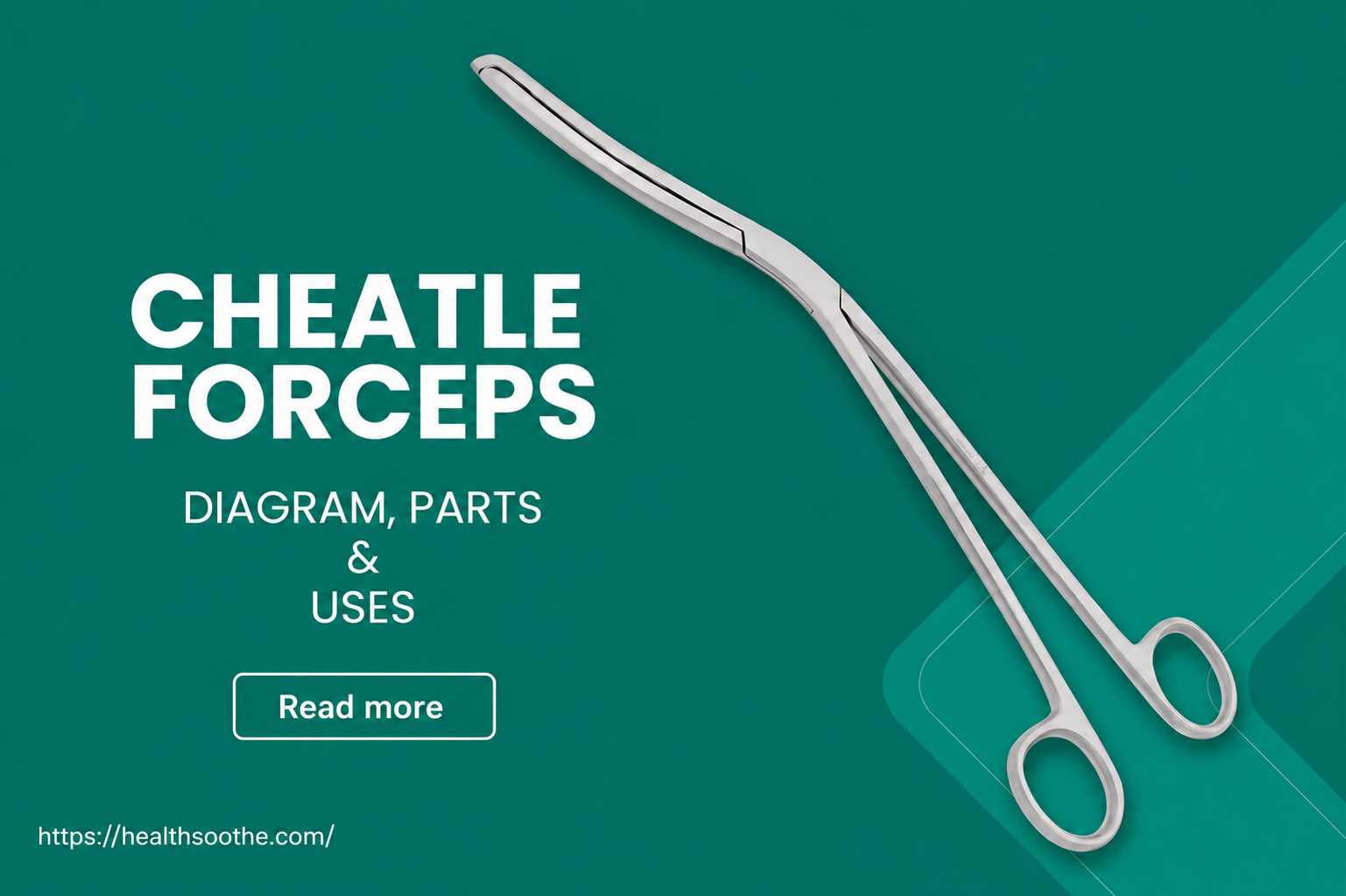
Sterile technique fails at the handling stage just as easily as it fails during a procedure. The moment a hand reaches into a sterile container or an autoclaved instrument is picked up by its working end, the sterile chain is broken. Cheatle Forceps exist to prevent exactly that. They are a dedicated transfer instrument, not built to touch the patient, but to move everything around the patient safely and without contamination.
This guide walks through each part of a Cheatle Forceps instrument, explains what every section does, covers the main clinical uses, and whether dentists and dental nurses can use them. It’s a good idea to understand the cheatle forceps diagram to help you in your field.
What Are Cheatle Forceps?
Cheatle Forceps are long-handled, ring-ended forceps used to pick up and transfer sterile instruments, dressings, gauze, and supplies from a sterile container to a sterile field without handling them directly. They are named after Sir Charles Cheatle, the British surgeon who developed them in the early twentieth century.
Standard surgical forceps grip tissue, bone, or sutures inside the patient. Cheatle Forceps never touch the patient at all. They handle items before and during procedure setup, which makes them a sterile handling tool rather than a surgical instrument in the traditional sense. That distinction shapes everything about how they are built.
Cheatle Forceps Diagram Parts: Walkthrough
To understand the structure, operations, and features of this instrument, one needs to understand the Cheatle Forceps Diagram, which directly simplifies the instrument for the user.
The five main parts are described below.
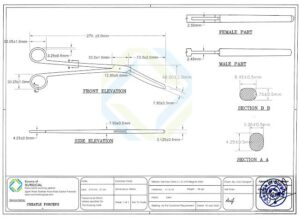
1. Finger Rings / Handles
Two loop-shaped rings at the top of the instrument, like scissor handles. The thumb goes into one ring and the index or middle finger into the other, allowing single-hand operation so the other hand stays clear of the sterile field.
2. Shank / Body
The long straight section connecting the rings to the jaws. Total instrument length runs to around 9 to 10 inches, keeping the operator’s hand well away from whatever is being transferred and preventing any part of the hand from passing over the sterile field.
3. Box Lock / Joint
The pivot point where the two arms cross and connect. A smooth, well-maintained box lock is critical — a stiff joint forces harder squeezing, which reduces control during fine transfers. The box lock is also the most important spot to clean thoroughly during decontamination, since gauze fibers collect there and are easy to miss on a quick wipe.
4. Jaws / Blades
The working end of the instrument. Blunt rather than pointed, since the job is holding items rather than piercing tissue. The inner surface is usually serrated or cross-hatched for a reliable grip on gauze, dressings, sponges, and small instruments.
5. Tip Pattern
Serrated tips are standard for most clinical settings. Some models have angled or curved jaws that make it easier to reach into a deep container without tilting the hand awkwardly over the opening. Non-serrated smooth tips are available for delicate sterile items where serrations might snag the material.
What Are Cheatle Forceps Used For?
- Transferring autoclaved instruments from a sterile drum or container to a procedure tray without direct hand contact
- Picking up and placing sterile gauze, cotton balls, dressings, and wound swabs during setup or dressing changes
- Loading sterile bowls and trays with syringes, needles, and supplies before a procedure begins
- Handling materials throughout a wound dressing change to maintain sterile technique from start to finish
- Setting up procedure trays for catheter insertions, IV placements, suturing, and similar bedside tasks
Can Dentists and Dental Nurses Use Cheatle Forceps?
Yes, and they are a practical fit. Cheatle Forceps are not exclusively a hospital instrument. The sterile transfer problems they solve on a surgical ward are the same ones that come up in a dental operatory, and any practice that runs autoclave cycles on instruments can incorporate them without any special training.
Dental Nurses During Tray Setup
A dental nurse setting up before a surgical extraction, implant placement, or periodontal procedure can use Cheatle Forceps to transfer autoclaved instruments from their pouches or cassettes to the sterile tray without touching the working ends. This is the core job they were built for, and it applies directly to a dental setting.
Handling Sterile Gauze and Swabs Chairside
Dental nurses handle gauze and swabs constantly during procedures. Using Cheatle Forceps to place sterile gauze onto the tray or into position keeps the sterile chain intact, which matters most in oral surgery and implant cases where the surgical site is open and exposure time is longer.
Cheatle Forceps are not built for working inside the mouth. Their length and design are for transfer and setup, not intraoral handling. Once treatment begins and the dentist is working chairside, standard dental instruments take over. Cheatle Forceps belong in the setup phase only. For practices that already sterilize all instruments, adding them to the tray setup routine is a low-cost, practical step toward tighter infection control.
Cheatle Forceps vs. Standard Surgical Forceps
| Feature | Cheatle Forceps | Standard Surgical Forceps |
|---|---|---|
| Primary purpose | Transfer sterile items | Grip tissue, bone, or sutures |
| Patient contact | None | Direct — used on or inside the patient |
| Length | 9 to 10 inches | Typically 5 to 8 inches |
| Jaw type | Blunt, serrated or smooth | Toothed, serrated, cupped, or smooth |
| Used in dental offices? | Yes — setup and transfer only | Yes — directly in the patient’s mouth |
Care, Sterilization, and Storage
Cheatle Forceps are surgical-grade stainless steel and fully autoclavable. After each use, open the jaws fully and run the instrument through an ultrasonic cleaner to clear the box lock and jaw serrations of fibers and debris. Sterilize on a standard steam autoclave cycle and store dry in a sterile container or pouch.
One storage practice worth flagging: older guidelines in some facilities allowed Cheatle Forceps to stand upright in a jar of disinfectant solution between uses. This is now discouraged in current U.S. infection control guidance because the solution can become contaminated over time with no visible sign, creating a false sense of sterility. Autoclave and store dry is the current standard. Before each use, confirm jaw tips align cleanly when closed. A stiff box lock, misaligned jaws, or visible corrosion are grounds to pull the instrument from service.
Where to Source Cheatle Forceps
For hospitals, dental offices, clinics, and training programs, look for ISO-certified surgical-grade stainless steel models with smooth box lock action and consistent jaw alignment. Surgitronix supplies clinical-grade Cheatle Forceps alongside a full range of sterile processing and surgical instruments.
Conclusion
Cheatle Forceps are one of the most widely used instruments in clinical setup, yet they are easy to overlook because they never touch the patient. That is exactly the point. They protect the sterile chain at the stage where it breaks most often: the transfer from storage to field. For hospitals and surgical settings, they are a long-established standard. For dental teams, they are a practical, ready-to-use addition to sterile tray setup that fits directly into existing sterilization workflows.