
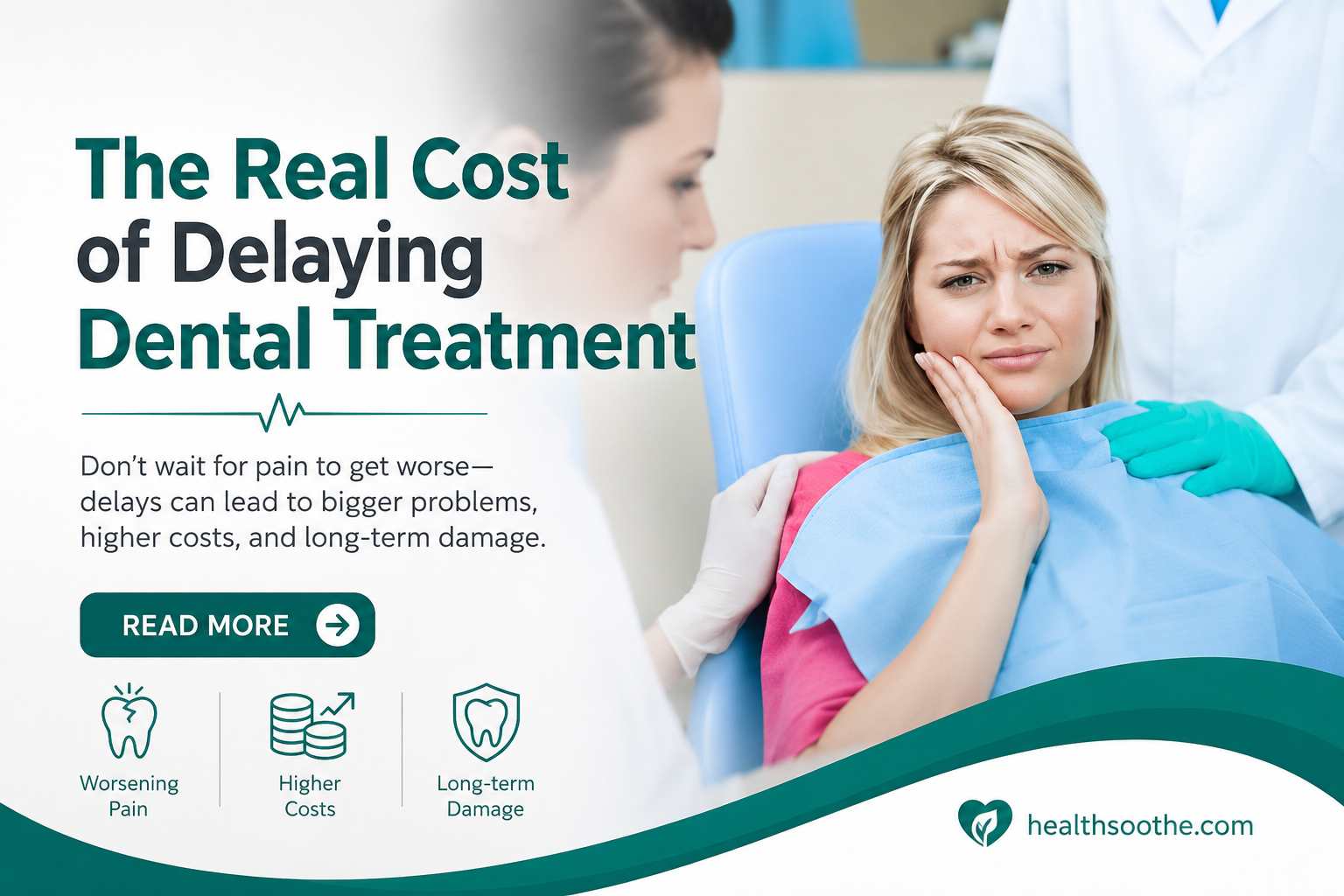
It’s easy to put off a dental visit. Maybe the appointment feels unnecessary, or the timing isn’t right, or there’s simply no pain to prompt urgency. But avoidance has a way of accumulating, and not just in your mouth. The cost of delaying dental treatment adds up quietly, in bigger procedures, longer recovery times, and expenses that dwarf what a routine checkup would have run. What starts as skipping one cleaning can set off a chain of consequences that affects your health, your schedule, and your finances far more than most people expect.
Key Takeaways
- Delaying dental care almost always results in more complex and more expensive treatment later
- Many serious oral conditions develop without pain, making early detection through regular visits essential
- The cost of delaying dental treatment extends beyond money to include time, comfort, and overall health
- Gum disease and untreated decay are directly linked to systemic health conditions
- Preventive care is consistently the most cost-effective approach to maintaining oral health
What Is Dental Avoidance?
Dental avoidance is exactly what it sounds like, skipping or indefinitely postponing dental visits despite knowing care is needed. It’s more common than most people admit. Some avoid due to cost concerns upfront. Others cite anxiety, time constraints, or simply not feeling any discomfort. The reasoning varies, but the result is largely the same.
The mouth is one of the few areas of the body where problems can remain completely silent for extended periods. A cavity forming between teeth won’t announce itself. Early gum disease rarely hurts. By the time a symptom appears, the underlying condition has often been developing for months, sometimes longer. That silence is what makes avoidance particularly costly in the long run.
Causes and Risk Factors Behind Dental Avoidance
Understanding why people avoid the dentist helps clarify who is most at risk for the downstream consequences. Dental anxiety is one of the leading reasons, ranging from mild unease to significant fear that makes scheduling feel impossible. Financial concerns are another major factor, particularly when someone lacks dental insurance or has a high out-of-pocket cost for initial visits.
Busy schedules, lack of a regular dental provider, and previous negative experiences also contribute. For some patients, there’s a belief that if nothing hurts, nothing is wrong. That assumption, while understandable, doesn’t reflect how most oral health conditions actually progress.
Signs That Avoidance Is Already Catching Up
The body does eventually signal that something needs attention. The challenge is that by the time these signs appear, the cost of delaying dental treatment has already grown.
Watch for:
- Tooth sensitivity that wasn’t there before
- Bleeding or tenderness in the gums when brushing or flossing
- A dull ache or pressure in one or more teeth
- Visible discoloration, spots, or changes in a tooth’s appearance
- Swelling anywhere along the gum line or jaw
- Persistent bad breath that doesn’t resolve with regular brushing
These aren’t minor inconveniences. They’re indicators that something has been progressing and that a dental evaluation is overdue.
The Real Cost of Delaying Dental Treatment
This is where avoidance becomes measurable. A small cavity treated at a routine visit costs a fraction of what a root canal runs. A root canal, while effective, costs significantly more than a filling, and if the tooth eventually needs to be extracted and replaced with an implant or bridge, the total expense climbs considerably higher.
Gum disease follows the same pattern. Professional cleanings and good home care can manage early-stage gingivitis at minimal cost. Once the condition advances to periodontitis, treatment involves scaling and root planing, and in more severe cases, surgical procedures. The financial gap between early and late intervention is substantial.
Beyond direct dental costs, there are indirect ones. Missing work for longer procedures, arranging transportation for multiple appointments, and managing discomfort during recovery all carry real weight. For patients managing health conditions like diabetes or heart disease, untreated oral infections can also complicate their overall medical care, adding another layer to the true cost of delayed treatment.
Great Expressions Dental Centers, founded in 1982 with more than 250 practices across Florida, Georgia, Michigan, New York, Ohio, Connecticut, Massachusetts, New Jersey, and Texas, consistently sees patients whose treatment needs expanded significantly during periods of avoidance. The clinical teams across the network are focused on helping patients understand their current situation and move forward with a clear, manageable plan.
Prevention Tips That Keep Costs Down
Preventive care is the most straightforward way to control the cost of delaying dental treatment before it starts. Consistent habits at home, combined with regular professional visits, dramatically reduce the likelihood of needing complex procedures.
- Brush twice daily using fluoride toothpaste
- Floss at least once a day to remove buildup between teeth
- Limit sugar and acidic foods and drinks that accelerate decay
- Stay hydrated to support healthy saliva production
- Ask about dental sealants if you or your child are prone to cavities
- Keep scheduled cleanings and exams, even when nothing feels wrong
These habits don’t eliminate all risk, but they significantly reduce the chances of minor issues becoming major ones.
Where you live shouldn’t determine whether you get ahead of a problem or fall behind on one. If you’re in Washington State and it’s been a while since your last exam, finding a Dentist Everett, WA residents trust is one of the simplest ways to close that gap before a small issue turns into a costly one.
When to Visit a Dentist?
Ideally, before anything hurts. Routine visits every six months give your dental team the opportunity to catch issues when they’re small, which keeps treatment simpler and costs lower. If it has been more than a year since your last exam, scheduling now is the most practical step you can take.
Certain situations call for an immediate appointment. Persistent tooth pain, visible swelling in the gums or jaw, a cracked or broken tooth, or a sore that hasn’t healed within two weeks all need prompt attention. Waiting in these cases tends to worsen the outcome and increase what treatment eventually requires.
Patients across the Great Expressions Dental Centers network are never made to feel uncomfortable about returning after a gap in care. The focus is always on where things stand now and what the path forward looks like.
Conclusion
The cost of delaying dental treatment is rarely just financial. It shows up in longer procedures, more recovery time, and the compounding effect of conditions that were treatable early becoming significantly harder to manage later. Oral health doesn’t exist in isolation either. Chronic gum disease and untreated infections have documented connections to heart disease, diabetes complications, and respiratory conditions.
With more than four decades of experience and a network spanning nine states, Great Expressions Dental Centers brings consistent, quality care to patients at every stage of their oral health journey. Getting ahead of problems is always easier than managing them after the fact.
Your Teeth Are Worth the Appointment
Dental avoidance costs more than people realize, and every month of delay adds to that total. Contact Great Expressions Dental Centers today and find out exactly where your oral health stands.