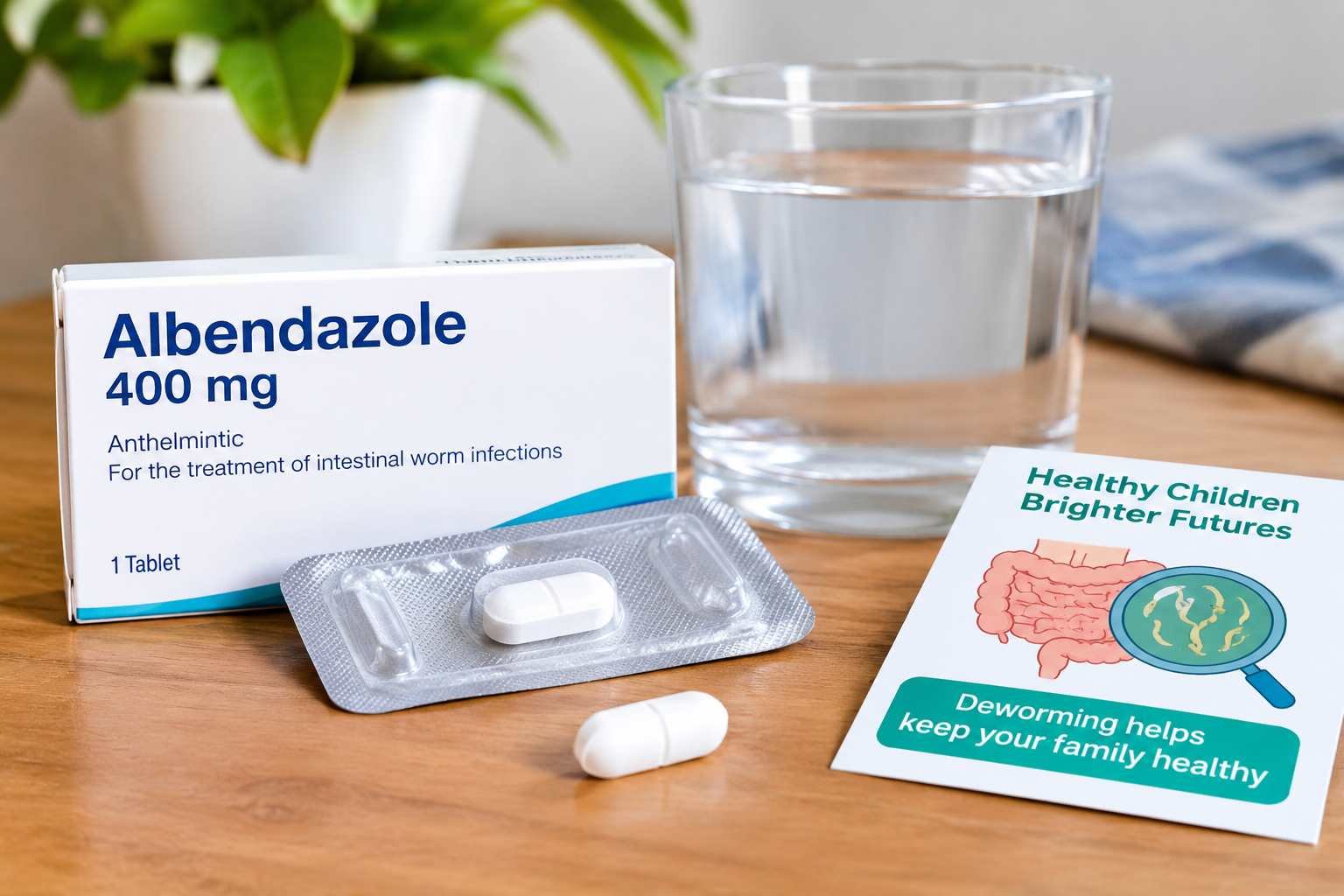
Deworming drugs (known locally as Ogun Aran Inu in Yoruba or Ichir mbi mbaaningoh in Tiv) are anthelmintic medications used to remove parasitic worms from the body. In Nigeria, intestinal worm infestations are common because of undercooked meat (such as suya, asun, and pork), unwashed hands, contaminated water, and walking barefoot on infected soil.
Counterfeit medications are widely sold in open markets, so always buy from a licensed pharmacy, check the packaging and labels, and confirm the correct age-based and weight-based dose with a healthcare professional.
Understanding Intestinal Worms and Their Symptoms
When parasitic worms live in your digestive tract, they take nutrients before your body can absorb them. This can lead to constant tiredness, unexplained weight loss, and vitamin deficiencies even when you eat well.
Type
Worms Common in Nigeria
Common Symptoms
Roundworms
Ascaris (large roundworm)
Hookworm
Pinworm
Threadworm
Constant tiredness
Abdominal pain or cramping
Nausea, vomiting, and diarrhea
Intense itching around the anus or vulva at night (a classic sign of pinworms)
Visible worms in stool
Some infestations cause no symptoms for years
Flatworms
Tapeworms
Flukes (often from undercooked beef, pork, and fresh fish)
Abdominal discomfort
Weight loss
Tapeworm segments in stool
Common Deworming Drugs and Prices in Nigeria (2026)
This table lists the most common anthelmintics in Nigerian pharmacies, how they work, and their estimated prices. Prices change often with inflation, wholesale supply, and your state, so use them as a guide only.
Drug and Local Brands
How It Works
Form and Usual Adult Dose
Estimated Price (₦)
Albendazole
(e.g., Zentel, Zolat, Alben)
Blocks glucose absorption, so the worm starves and dies.
Adults and children over 2 years: 400 mg tablet (single dose)
Pinworm: repeat the dose after 2 weeks
Less effective against whipworm
Children: 200 mg/5 ml oral suspension, with the dose set by age
Tablets: 1,500 to 3,500
Suspension: 2,500 to 4,500
Mebendazole
(e.g., Vermox, Mebex)
Stops the worm from taking in glucose, similar to albendazole.
Roundworm, hookworm, whipworm: 100 mg twice daily for 3 days, or 500 mg once
Pinworm: 100 mg once, repeated after 2 weeks
Tablets: 1,200 to 2,500
Pyrantel Pamoate
(e.g., Combantrin)
Paralyzes the worm’s nervous system so it passes out with stool.
250 mg/5 ml oral suspension
Dose calculated strictly by body weight (11 mg per kg, maximum 1 g)
Pinworm: repeat after 2 weeks
Suspension: 2,000 to 4,000
Praziquantel
(targeted treatment)
Paralyzes flatworms. Used for tapeworms and schistosomiasis (Atosi Aje).
Prescription only. Not used for routine deworming and needs a laboratory test first.
Varies with the prescription
Ivermectin
(targeted treatment)
Acts on microfilariae. Used for strongyloides and river blindness.
Given mainly through mass health programs. Dose is set strictly by weight.
Distributed mainly through health programs
Why You Need to Repeat Your Deworming Dose
Most deworming drugs kill adult worms but leave microscopic eggs unharmed. For pinworm, the CDC advises a second dose 2 weeks after the first, so that any worms that hatch in the meantime are destroyed before they can reproduce. Everyone in the household should be treated at the same time. For other worms, a repeat dose is only needed if symptoms or infection persist, so ask a pharmacist or doctor.
Safety and Hygiene Guide
Category
Precautions
Prevention
High-Risk Restrictions
Get medical advice first if you are pregnant (WHO advises deworming only after the first trimester), breastfeeding, treating a child under 2 years old, or have liver disease.
Never take veterinary or livestock-grade albendazole. Use only NAFDAC-approved human medication.
WHO recommends deworming once or twice a year in areas where worms are common, especially for children who play in soil. Ask a pharmacist how often applies where you live.
Mild side effects such as brief nausea, light stomach cramps, dizziness, or headache can occur.
Daily Hygiene
Wash your hands with soap and clean water before handling food.
Cook all meat thoroughly, especially roadside suya and asun.
Wash fruits and raw vegetables before eating.
Wear shoes or slippers outdoors to prevent hookworm from entering through bare skin.
We are sorry that this post was not useful for you!
Let us improve this post!
Tell us how we can improve this post?
Editorial Policy: HealthSoothe is dedicated to providing evidence-based, actionable wellness content. Every piece of content or review on our platform is cross-referenced with peer-reviewed medical journals and verified by certified healthcare professionals before publication.
Written by: Isreal Olabanji, certified Dental Nurse (DST, RN), with training in pharmacy, anatomy, and physiology.
About the medicine information: This article gives general information and does not provide personal dosing advice. Doses differ for children, pregnancy, kidney or liver problems, and people taking other medicines.
Before you take any medicine: check with your doctor or a licensed pharmacist, especially if you take other drugs, are pregnant or breastfeeding, or have a long-term condition.
Get urgent care if you have severe or spreading swelling, fever, trouble breathing or swallowing, or pain that does not ease. Do not wait for a medicine to work.
Chief Dzeen Keghnen Kenneth, RCHP, PharmD (in view) is a Registered Community Health Practitioner with a background in community health and pharmaceutical sciences. As a PharmD in view, he focuses on evidence-based drug information, medication safety, and rational use of medicines. He reviews and simplifies drug literature to help healthcare professionals and the public make informed decisions.
We use cookies for Google Analytics and for advertising that helps support Healthsoothe. You can accept or reject them. Rejecting will not affect your use of the site. You can change your choice at any time. See our Privacy Policy.