
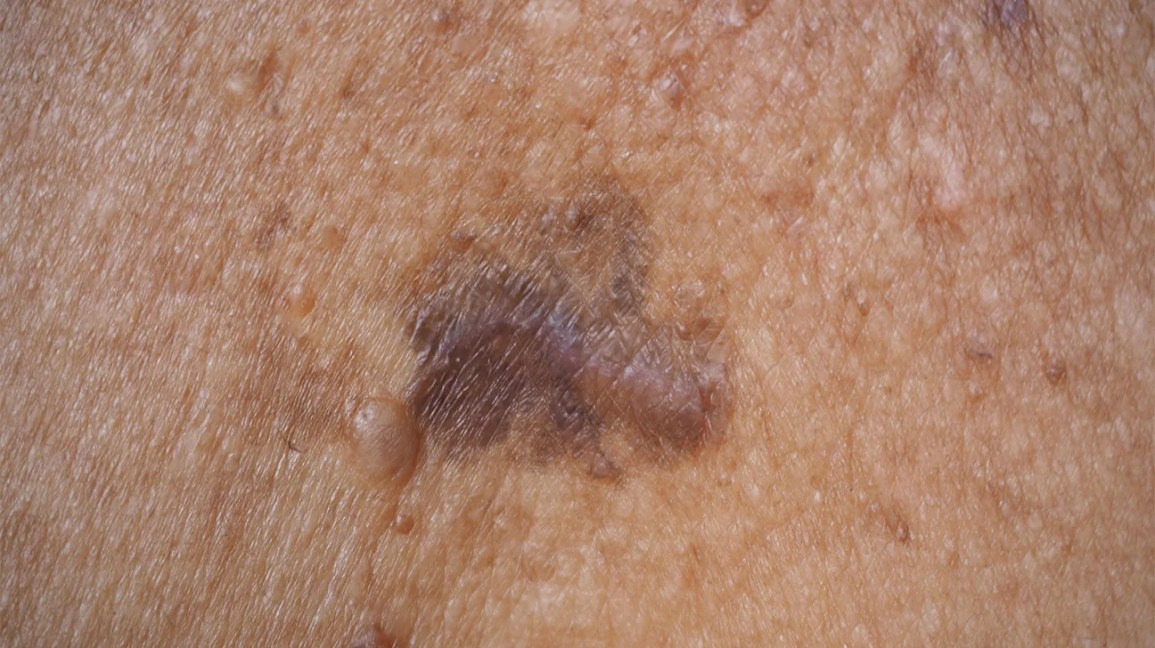
Skin cancer on Black skin often looks nothing like the pale-skin examples most health content shows you. A new dark mole standing out against fair skin. A pink, scaly patch after years of sunburn. If you have brown or black skin, following that same mental picture can actually work against you, because it sends you looking in the wrong places for the wrong signs.
Skin cancer on Black skin is real, and when it happens, it’s often caught far later than it should be. Not because it grows any faster. Because it tends to show up in places nobody thinks to check, and it’s frequently mistaken for something harmless until it isn’t.
Why “Lower Risk” Doesn’t Mean “No Risk”
It’s true that melanin gives darker skin natural protection against UV damage, and it’s true that sun-driven melanoma is far less common in Black people than in white people. But that protection creates a dangerous assumption: that dark skin is somehow immune to skin cancer altogether.
It isn’t, and the numbers show why this matters. According to a 2019 CDC-backed study cited by the AAMC, Black patients diagnosed with melanoma had a five-year survival rate of around 66%, compared to about 90% for non-Hispanic white patients, for cases diagnosed between 2011 and 2015. Black patients are also significantly more likely to be diagnosed at a later stage. The gap isn’t because the cancer behaves more aggressively in Black patients. It’s because it’s usually found later, after it’s already had time to spread.
A few things drive that delay. People with darker skin often see themselves as low-risk and skip the self-checks altogether. Many doctors were trained almost entirely on how skin cancer looks on light skin, so an unusual patch on darker skin doesn’t always trigger the same alarm bells. And the type of melanoma that shows up most often in dark skin doesn’t look anything like the mole-turned-cancerous image most health content shows.
The Type of Melanoma You Actually Need to Know: Acral Lentiginous Melanoma
The most common form of skin cancer on Black skin has a name most people have never heard: acral lentiginous melanoma, or ALM. It’s rare overall, making up only a small percentage of all melanomas diagnosed worldwide. But in Black patients specifically, it accounts for a large share of melanoma cases, far more than in white patients.
ALM shows up in places that rarely see the sun: the palms of the hands, the soles of the feet, and under the fingernails or toenails. That’s part of why it’s so dangerous. Because it isn’t sun-related, it doesn’t follow the pattern people are told to watch for, and it develops in spots most people never think to examine closely. According to City of Hope, ALM is typically diagnosed between ages 60 and 70, and unlike other melanoma types, it isn’t linked to sun exposure at all since it forms in areas sunscreen can’t reach anyway.
What It Actually Looks Like
This is the part that gets skipped in most skin cancer content, and it’s the part that matters most if you have dark skin.
On the palms or soles: ALM usually starts as a flat, irregular patch of dark brown, black, gray, or tan discoloration. It’s easy to mistake for a bruise, a stain, a callus, or a wart, especially because it can sit quietly for months or years before someone notices it’s actually growing.
Under the nails: Watch for a new dark streak running lengthwise down a single fingernail or toenail, particularly on the thumb or big toe. A streak that’s widening over time, or one where the dark pigment starts spreading into the skin around the nail fold, is a warning sign dermatologists call Hutchinson’s sign, and it should never be ignored. The nail may also crack, lift, or break in a way that doesn’t match any injury you remember having.
The color trap: Not every case is dark. Some ALM lesions are lightly colored, pink, red, or close to your normal skin tone, which makes them even easier to dismiss. This is why relying on “look for something dark” as your only rule can let a dangerous lesion slide by unnoticed.
Because ALM so often mimics everyday things like a stubborn bruise, a fungal nail infection, or a callus from tight shoes, it’s commonly misdiagnosed at first, by patients and doctors alike.
Bob Marley’s Diagnosis Is Still One of the Best-Known Cases
In 1977, Bob Marley noticed a dark spot under the nail of his right big toe. He was 32 years old and assumed it was from a soccer injury. When it didn’t heal, he eventually saw a doctor, and a biopsy confirmed acral lentiginous melanoma. Doctors recommended amputating the toe. Marley declined the surgery for religious reasons and opted for a less invasive procedure to remove the nail and surrounding tissue instead.
The cancer eventually spread to his lungs, liver, and brain. He died in 1981 at age 36, less than four years after that first dark spot appeared.
His case is still widely referenced in dermatology education today, not because his experience was unusual, but because it illustrates exactly how ALM gets missed: a spot in a place nobody checks, mistaken for an everyday injury, until it’s already advanced.
Where to Check for Skin Cancer on Black Skin
A proper self-exam on darker skin needs to go beyond the usual “check your moles” advice. Make a habit of examining:
- The palms of both hands and the spaces between fingers
- The soles of both feet, including between the toes
- Every fingernail and toenail, comparing both sides for anything asymmetrical
- Your scalp, by parting your hair in sections
- Behind and inside your ears
- Your groin and buttocks
- Inside your mouth and on your lips
- Your back, using a mirror or asking someone you trust to look
Adjusting the ABCDE Method for Dark Skin
The standard ABCDE rule for melanoma (Asymmetry, Border irregularity, Color variation, Diameter over 6mm, Evolving) still applies, but the “C” for color needs a mental adjustment. On pale skin, a dark mole stands out sharply. On dark skin, that same contrast can be much fainter, or the lesion might not be dark at all.
This makes “E” for Evolving your most reliable signal. Pay closer attention to anything that’s changing shape, growing, cracking, bleeding, or simply refusing to heal, regardless of how alarming or unalarming its color looks. A single nail with a new dark streak that has no clear injury behind it deserves a dermatologist’s attention, especially if it’s spreading or widening over a matter of weeks or months.
When to See a Doctor
Book an appointment if you notice any of the following:
- A new pigmented streak under a nail with no obvious injury to explain it
- A patch on your palm or sole that’s growing, changing color, or won’t go away
- A sore or lesion that hasn’t healed within a few weeks
- Any close family history of melanoma, which raises your own risk regardless of skin tone
Recognizing skin cancer on Black skin early is what actually changes outcomes, not skin tone itself. If you haven’t done a full check for skin cancer recently, our complete guide walks through the ABCDE method step by step and explains exactly what to expect once you’re in front of a dermatologist, including when a biopsy is needed and how the different diagnostic tools work.
FAQs
Is skin cancer rare in Black people? Skin cancer on Black skin is less common than in white people overall, but it isn’t rare, and it’s frequently diagnosed at a later, more dangerous stage. Lower incidence should never be confused with lower risk.
Does darker skin protect you from skin cancer? Melanin does offer some natural protection against UV-driven skin cancers, but it offers no protection against acral lentiginous melanoma, which isn’t caused by sun exposure and can develop on anyone regardless of skin tone.
What does melanoma look like on Black skin? Most often it appears as a dark brown, black, gray, or tan patch on the palms or soles, or as a new dark streak under a fingernail or toenail. Less commonly, it can appear pink, red, or close to your natural skin color, which makes it easy to overlook.
Can a Black person get skin cancer from the sun? Yes. Sun-related skin cancers, including basal cell carcinoma, squamous cell carcinoma, and other forms of melanoma, still occur in Black people, particularly on sun-exposed areas of the skin. Acral lentiginous melanoma is simply the type that shows up disproportionately more often, and it has nothing to do with sun exposure.