Dysautonomia | Learn all about Dysautonomia and its Different Types including what Postural Orthostatic Tachycardia Syndrome (POTS) is all About

Introduction to Dysautonomia Dysautonomia refers to a disorder of the autonomic nervous system (ANS) function that generally involves failure of the sympathetic or parasympathetic components of the ANS, but dysautonomia involving excessive or overactive ANS actions also can occur. Dysautonomia can be local, as in reflex sympathetic dystrophy, or generalized, as in pure autonomic failure. …
Read more

Learn About The Various Levels Of Consciousness Of A Human Being

The normal state of consciousness comprises either the state of wakefulness, awareness, or alertness in which most human beings function while not asleep or one of the recognized stages of normal sleep from which the person can be readily awakened. The abnormal state of consciousness is more difficult to define and characterize, as evidenced by …

Read more

Schamberg Disease | Symptoms, Causes, Treatment and Prevention

Schamberg disease represents the most common type of pigmented purpuric dermatoses (PPDs), a chronic, benign, cutaneous eruptions characterized by petechiae, purpura, and increased skin pigmentation (brown, red, or yellow patchy).   In Summary: Schamberg disease is a skin ailment that produces pigmentation of the lower limbs. It mainly affects the lower limbs and very rarely …

Read more

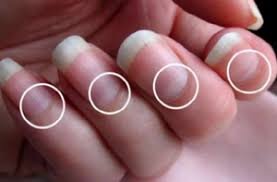
Lunula Function (Nail Problems): With Pictures, Videos, and FAQs

Lunala

The half-moon shape at the base of your fingernail is known as a lunula. Lunulae cover the bottom of your nail, just above your cuticle. [ninja_tables id=”73415″] Lunulae are part of your nail matrix. The matrix refers to the tissue just beneath your nail. It contains nerves, lymph, and blood vessels. It also produces the …

Read more

Smith Lemli Opitz Syndrome Symptoms, Causes and More

Definition and Description of Smith Lemli Opitz Syndrome   Smith-Lemli-Opitz syndrome is a congenital or developmental condition that affects many bodily systems. This disorder is distinguished by unusual facial characteristics, a tiny head shape (microcephaly), intellectual handicap or learning difficulties, and behavioral difficulties. Many of the children impacted by this syndrome have autism, a developmental …

Read more