

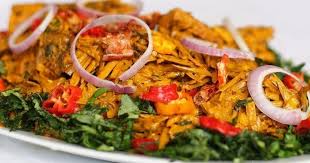
Abacha, also known as African salad, is a popular Nigerian dish that many people enjoy locally and internationally. It is a traditional meal that originated from the Igbo people of Eastern Nigeria and is made from cassava, a starchy tuberous root that is a staple food in many parts of the world.
Abacha is a flavorful and delicious meal that is commonly served as an appetizer or as a main course. It is prepared by soaking grated cassava in cold water to remove the cyanide content. The cassava is then cooked and mixed with various ingredients including palm oil, onions, salt, pepper, and spices.
One of the main ingredients in Abacha is ugba, also known as ukpaka, a fermented oil bean seed. Ugba adds a unique flavour and texture to the dish, and it is a good source of protein, fibre, and essential vitamins.
Other ingredients that can be added to Abacha include vegetables such as shredded carrots, green peppers, and cabbage, as well as proteins like smoked fish, stockfish, and crayfish. Some people add groundnut oil, tomato paste, and ground chilli pepper to the dish to enhance the flavour.
Abacha is typically served cold and can be eaten on its own or with other Nigerian dishes like fried plantains (dodo), grilled chicken, or jollof rice. It is a popular street food in Nigeria and is often sold by street vendors in small plastic bowls or wrapped in banana leaves.
Abacha is not only a tasty meal but also a nutritious one. Cassava, the main ingredient in Abacha, is a good source of carbohydrates, dietary fibre, and essential vitamins and minerals such as vitamin C, iron, and potassium. Ugba, the fermented oil bean seed, is also rich in protein and vitamins, making Abacha a healthy and satisfying meal.
Ingredients of Abacha
The main ingredient in Abacha is cassava, a starchy tuberous root that is a staple food in many parts of the world. Cassava is rich in carbohydrates, dietary fibre, and essential vitamins and minerals such as vitamin C, iron, and potassium.
However, cassava also contains cyanide, a toxic compound that can cause serious health problems if not properly removed. Therefore, the cassava used in Abacha is grated and soaked in cold water for several hours to remove the cyanide content.
Another important ingredient in Abacha is ugba, also known as ukpaka, which is a fermented oil bean seed. Ugba is a good source of protein, fibre, essential vitamins and minerals, and it adds a unique flavour and texture to the dish. Ugba is typically soaked in water before being added to Abacha to soften it and reduce its bitterness.
Palm oil is another crucial ingredient in Abacha. Palm oil is a vegetable oil that is extracted from the fruit of the oil palm tree. It is rich in antioxidants and essential nutrients such as vitamin A and vitamin E. Palm oil is used to cook the cassava and to add flavour and colour to the dish.
Onions are also an essential ingredient in Abacha. Onions add a sweet and savoury flavour to the dish and help to balance out the other ingredients. They can be finely chopped or sliced and are typically sautéed in palm oil before being added to the dish.
Salt and pepper are also used to season Abacha. Salt is used to enhance the flavour of the other ingredients, while pepper is used to add a spicy kick to the dish. The type of pepper used can vary depending on personal preference, but most commonly, scotch bonnet peppers or chilli peppers are used.
A variety of spices can also be added to Abacha to enhance the flavour of the dish. Some of the most common spices used include ground crayfish, curry powder, and thyme. These spices add depth and complexity to the dish and help to bring out the flavours of the other ingredients.
Finally, vegetables and proteins can be added to Abacha to create a more substantial and satisfying meal. Vegetables such as shredded carrots, green peppers, and cabbage can be added to provide crunch and freshness to the dish. Proteins like smoked fish, stockfish, and crayfish can be added to provide additional flavour and nutrition.
Preparation of Abacha
The preparation of Abacha requires careful attention to detail to ensure that the ingredients are properly prepared and the flavours are well balanced. In this article, we will discuss the step-by-step process of preparing an Abacha.
Soaking of Grated Cassava
The first step in preparing Abacha is to soak the grated cassava in cold water. This is done to remove the cyanide content from the cassava, which can cause serious health problems if not properly removed. The grated cassava is placed in a large bowl or basin and covered with cold water.
The cassava is then left to soak for several hours, usually overnight, to ensure that all the cyanide is removed. During this process, the water is changed several times to ensure that the cassava is properly washed.
Cooking of Cassava
After the cassava has been soaked, it is drained and cooked. The cassava is placed in a large pot and covered with water. The pot is placed on a stove or fire and the cassava is cooked until it is tender. This usually takes about 20-30 minutes. The cassava is then drained and rinsed with cold water to stop the cooking process and remove any excess starch.
Mixing of Ingredients
Once the cassava is cooked and drained, it is ready to be mixed with the other ingredients. The ingredients for Abacha can vary, but the most common ones are ugba (fermented oil bean seed), palm oil, onions, salt, pepper, and spices. The ugba is typically soaked in water before being added to the Abacha to soften it and reduce its bitterness.
To prepare the dressing for Abacha, the palm oil is heated in a pan until it is hot. The sliced onions are added and sautéed until they are soft and translucent. The spices, salt, and pepper are then added to the pan and stirred to combine.
The cooked cassava and ugba are then added to the pan and stirred to coat them with the dressing. The mixture is then allowed to cool
After the mixture has cooled, it is ready to be served. Abacha can be served as a main dish or as a side dish. It is typically garnished with chopped vegetables such as tomatoes, cucumbers, and green peppers. Some people also like to add protein such as smoked fish or crayfish to the Abacha for additional flavour and nutrition.
Preparing Abacha requires several steps, including soaking the grated cassava, cooking the cassava, and mixing the ingredients. The key to a delicious Abacha is to ensure that the ingredients are properly prepared and the flavours are well balanced. With practice and patience, anyone can master the art of preparing Abacha and enjoy this delicious Nigerian dish.
Serving of Abacha
It is a delicious and nutritious dish that is typically served cold and garnished with a variety of vegetables and proteins.
Cold Serving
Abacha is typically served cold, which makes it a refreshing dish to enjoy on a hot day. The cold temperature also helps to enhance the flavour and texture of the dish. After the Abacha has been prepared, it is allowed to cool to room temperature before being refrigerated for several hours or overnight. This helps the flavours to develop and makes the Abacha more enjoyable.
Accompaniments
Abacha is typically served with a variety of accompaniments that help to enhance its flavour and nutrition. Some of the most common accompaniments include chopped vegetables such as tomatoes, onions, cucumbers, and green peppers. These vegetables add colour, texture, and freshness to the Abacha, and they also provide additional nutrients. Some people also like to add protein to their Abacha, such as smoked fish or crayfish, to add flavour and nutrition.
Abacha is typically eaten with a fork and is enjoyed as a main dish or as a side dish. It is often served at social gatherings such as weddings, birthdays, and other celebrations, and it is also enjoyed as a snack or light meal.
Availability of Abacha
Abacha is a popular dish in Nigeria and can be found in most markets and food stalls. It is also available in restaurants and other eateries that specialize in Nigerian cuisine. Abacha is typically made from scratch, and many people prefer to prepare it at home to ensure that it is fresh and nutritious. However, for those who do not have the time or resources to prepare it at home, there are many options available in the market.
Conclusion
Abacha is a delicious and nutritious Nigerian dish that many people around the world enjoy. Its unique blend of flavours and textures makes it a popular choice for both appetizers and main courses. Whether you are looking to try something new or simply want to enjoy a flavorful and healthy meal, Abacha is definitely worth a try.
