
Close Menu
  • Healthy
    • Skin & Body Care
    • Weight and Fitness
    • Mental Health
    • Medications Drug Information
    • Conditions Syndromes
    • Pill Capsule Identification
    • Medication Safety
    • Drug Interactions
  • Dental Care
    • Dental Procedures And Treatments
    • Dental Costs and Insurance
    • Pediatric Dental Care
    • TMJ Jaw Health
    • Dental Product Reviews
    • Dental instruments
  • Health Tools
    • Body Tat Calc
    • CALC Diet Calorie
    • Ideal Body Weight Calc
    • Burned Calories Calc
    • View All
  • Nutrition
  • Connect
    • About us
    • Contact us
  • Submit Product
Facebook X (Twitter) Instagram
Healthsoothe: Our Wellbeing
Homepage - Health - Common Mistakes to Avoid When Getting a Hair Transplant in Mumbai

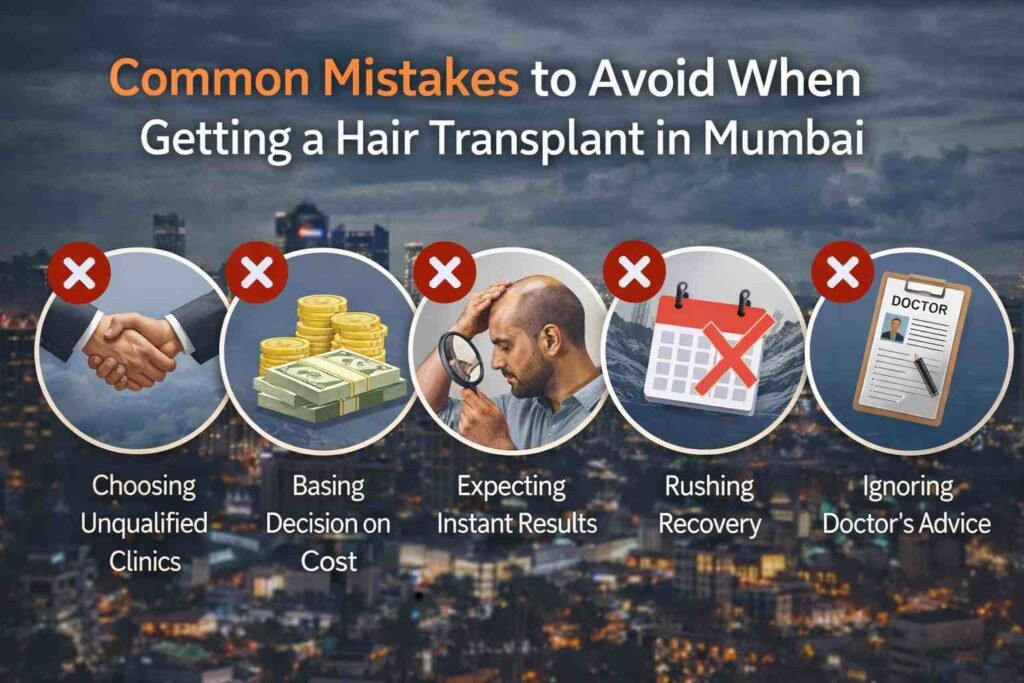
Common Mistakes to Avoid When Getting a Hair Transplant in Mumbai

Isreal Olabanji DST, RNIsreal Olabanji DST, RNUpdated:August 20, 2026
Share the Knowledge. Spread the Wellness! Facebook Twitter Pinterest LinkedIn Reddit WhatsApp
Follow Us
Add as Preferred on Google Facebook Instagram Pinterest

Many people spend months researching hair transplant clinics in Mumbai, comparing prices, scrolling through before-and-after photos, and reading reviews, only to realize after the procedure that they missed something important. A hair transplant is a surgical decision, and like any medical procedure, the outcome depends as much on preparation and informed choices as it does on the surgeon’s skill. Understanding what can go wrong before, during, and after the process can help patients walk into this experience with realistic expectations and better results.

Jump to What You Need
  1. Choosing a Clinic Based on Price Alone
  2. Not Getting a Proper Scalp and Hair Loss Evaluation First
  3. Having Unrealistic Expectations About Results
  4. Ignoring Post-Procedure Care Instructions
  5. Neglecting to Address Ongoing Hair Loss After the Transplant
  6. Final Thoughts
    1. Keep reading

Choosing a Clinic Based on Price Alone

Cost is a legitimate concern, especially in a city like Mumbai, where hair transplant pricing varies widely. However, selecting a clinic primarily because it offers the lowest quote is one of the most common mistakes patients make.

A lower price may reflect:

  • Fewer graft quality checks
  • Less experienced surgical staff
  • Outdated extraction techniques
  • Inadequate post-procedure care or follow-up

A hair transplant involves harvesting follicular units from a donor area and implanting them into thinning or bald zones. The precision of this extraction directly affects how well grafts survive after implantation. Compromising on quality at this stage can lead to poor density, patchy results, or graft failure all of which may require corrective procedures that cost significantly more.

Not Getting a Proper Scalp and Hair Loss Evaluation First

Hair loss has many causes androgenetic alopecia, nutritional deficiencies, thyroid imbalances, stress-related shedding, or scarring conditions. A hair transplant is only appropriate when hair loss has reached a stable, assessable stage and the underlying cause has been properly identified.

Patients who skip this evaluation often discover that their hair loss was still progressing at the time of transplant. When that happens, newly transplanted areas may look full while the surrounding native hair continues to thin, creating an unnatural appearance over time.

A thorough pre-procedure workup typically includes a trichoscopy assessment, blood panel, and a detailed review of the pattern and progression of hair loss. Clinics like Kibo Clinics prioritize this evaluation step before any treatment plan is recommended, recognizing that the right diagnosis shapes the entire approach.

Having Unrealistic Expectations About Results

Hair transplants can deliver meaningful, natural-looking improvement but they work within biological limits. The most common source of patient dissatisfaction is not a failed procedure but mismatched expectations.

Key realities to understand:

  • Final results typically take 12 to 18 months to fully appear
  • Transplanted hair sheds in the first few weeks post-procedure this is normal and expected
  • The density achieved depends on the number of grafts available in the donor area
  • Patients with limited donor hair may not achieve the same coverage as those with robust donor zones
  • A single session may not be sufficient for advanced hair loss

Understanding these timelines and limitations before committing to a procedure allows patients to make a more informed decision and avoid disappointment.

Ignoring Post-Procedure Care Instructions

The implanted grafts are in a fragile state during the first two weeks after surgery. This is the period when most avoidable complications occur. Patients who underestimate the recovery phase often expose their scalps to unnecessary risk.

Common post-procedure mistakes include:

  • Washing the scalp too aggressively or too soon
  • Returning to intense physical activity within the first week
  • Exposing the scalp to direct sunlight without protection
  • Sleeping without the recommended head elevation
  • Resuming blood-thinning medications or supplements without clearance

Graft survival depends on how well this early healing phase is managed. Following the clinic’s aftercare protocol carefully is not optional it is a direct factor in how well the transplant takes.

Neglecting to Address Ongoing Hair Loss After the Transplant

A hair transplant moves permanent follicles from the donor region to areas of hair loss. However, it does not stop the biological process of androgenetic hair loss in the surrounding native hair. Without a plan to manage ongoing hair loss, which may include medically reviewed options like minoxidil, finasteride, or periodic PRP sessions, patients may find that new areas begin thinning in the years following their procedure.

You May Also Like
  • The Science of the Coil: Questions to Ask Before Getting an Afro Hair Transplant
  • Are You Making These 5 Common Mistakes with Your Back Pain?
  • What Should Patients Consider Before Getting Hydrafacial in Mumbai?

Discussing a long-term maintenance strategy with a treating physician before the procedure helps set a more complete picture of what the outcome will look like five or ten years down the line.

Final Thoughts

A hair transplant in Mumbai can be a well-considered, effective solution for the right candidate, but only when approached with accurate information and proper medical guidance. The decisions made before the procedure often matter just as much as the procedure itself. Taking time to understand the evaluation process, ask the right questions, set grounded expectations, and follow through with aftercare and maintenance can make the difference between a result that looks natural and lasting and one that requires correction.

Keep reading

  • Understanding FUE and FUT for Hair Restoration

How useful was this post?

Click on a star to rate it!

Average rating 0 / 5. Vote count: 0

No votes so far! Be the first to rate this post.

We are sorry that this post was not useful for you!

Let us improve this post!

Tell us how we can improve this post?

Editorial Policy: HealthSoothe is dedicated to providing evidence-based, actionable wellness content. Every piece of content or review on our platform is cross-referenced with peer-reviewed medical journals and verified by certified healthcare professionals before publication.

Written by: Isreal Olabanji, certified Dental Nurse (DST, RN), with training in pharmacy, anatomy, and physiology.

Healthsoothe provides general education only. It does not replace advice from your doctor, dentist, or pharmacist. Confirm medicines and doses with a licensed professional before taking them.

hair transplant
Add as Preferred on Google Follow on Facebook Follow on Instagram Follow on Pinterest
Share. Facebook Twitter Pinterest LinkedIn Tumblr Email Reddit WhatsApp
Isreal Olabanji DST, RN
  • Website
  • Facebook
  • X (Twitter)
  • Pinterest
  • Instagram
  • LinkedIn

Isreal Olabanji is a certified Dental Nurse (DST, RN) in Nigeria with a background in pharmacy, anatomy, and physiology. His hands-on clinical experience includes pharmacy and family planning services at the 32 Artillery Brigade clinic, Owena Cantonment, Akure (2012), dental surgery assistance at the State Specialist Hospital, Oke-Aro, Akure (2013) and the State Specialist Hospital, Ikare-Akoko (2014), and work as a dental assistant at the Federal Medical Centre, Owo (2016). Drawing on this experience in patient care, oral health education, public health, and dental instruments, he writes evidence-based dental and oral health content for readers in Nigeria, the United States, and beyond. Follow Isreal on Twitter, Facebook, Instagram, TikTok, Pinterest, or LinkedIn.

Add A Comment

Comments are closed.

Explore Health Calculator

Clinician-Informed Diagnostics

Available ToolsAction
Oral Health Risk AnalyzerCheck Risk
Dental Infection Severity ScaleRate Severity
Dental Cost & Insurance EstimatorEstimate
Page
  • Contact us
  • Privacy & Affiliate Disclosure
  • Terms & Conditions
  • Advertise
  • Sitemap: Easy Access
  • Blog
  • About Healthsoothe
Free Health calc
  • BMI & Oral Health Risk Calculator
  • Dental Cost Estimator Calculator
  • Dental Student Practical Calculator
  • FREE Body Fat Calculator for Men and Women | Calculate your Body Fat Using 7 Different Methods
  • Free Dental Infection Severity Calculator
  • Free Oral Health Risk Calculator — Find Your Risk Level
  • Online Calculator Of Golden Ratio Face
Product Reviews
  • Submit a Product
  • Review Policy
  • Brand Partnerships
  • Review Methodology
  • Contact us
  • Privacy & Affiliate Disclosure
  • Terms & Conditions
  • Advertise
  • Sitemap: Easy Access
  • Blog
  • About Healthsoothe
© 2026 Isreal Olabanji Services World LLC Healthsoothe.com. All rights reserved. Healthsoothe is a registered trademark of Isreal Olabanji Services World LLC. Disclaimer: Statements made, or products sold through this website, have not been evaluated by the United States Food and Drug Administration. Also, National Agency for Food and Drug Administration and Control. They are not intended to diagnose, treat, cure or prevent any disease. Please note that Isreal Olabanji Services World LLC is not affiliated with, or in any way related to, websites that are not specifically Healthsoothe.com. Isreal Olabanji Services World LLC. is not responsible or liable for products sold or shipped from unauthorised sources.

Type above and press Enter to search. Press Esc to cancel.

We value your privacy

We use cookies for Google Analytics and for advertising that helps support Healthsoothe. You can accept or reject them. Rejecting will not affect your use of the site. You can change your choice at any time. See our Privacy Policy.

WhatsApp us